Uncategorized

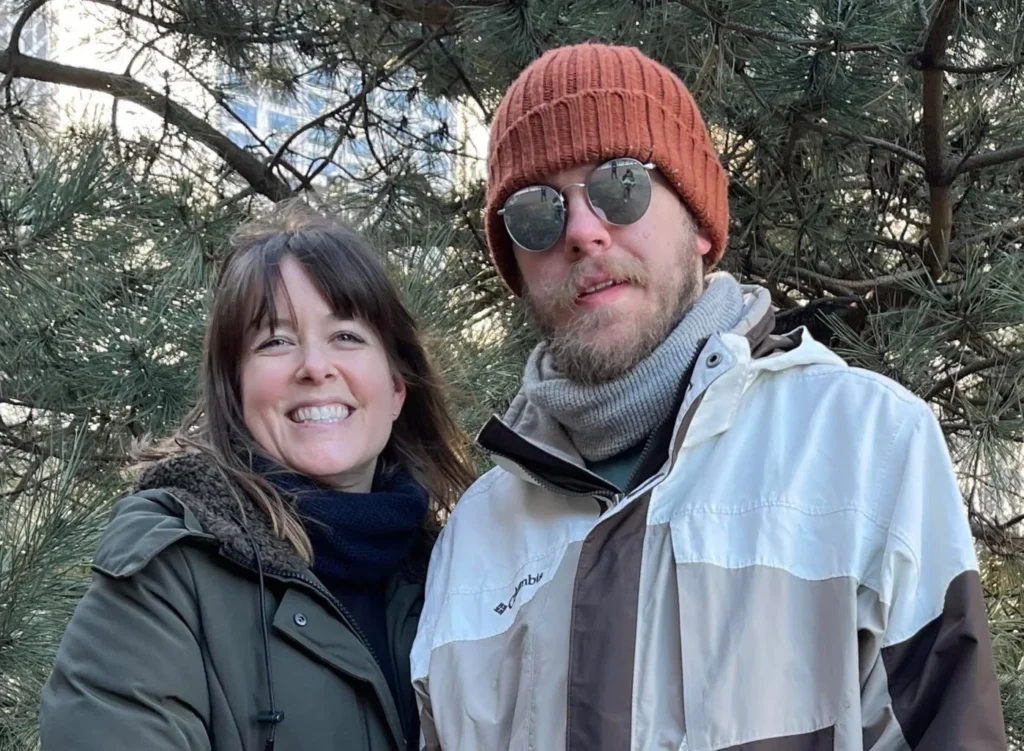
How My Husband’s Disability Eased my Anxiety and Enhanced my Birding 

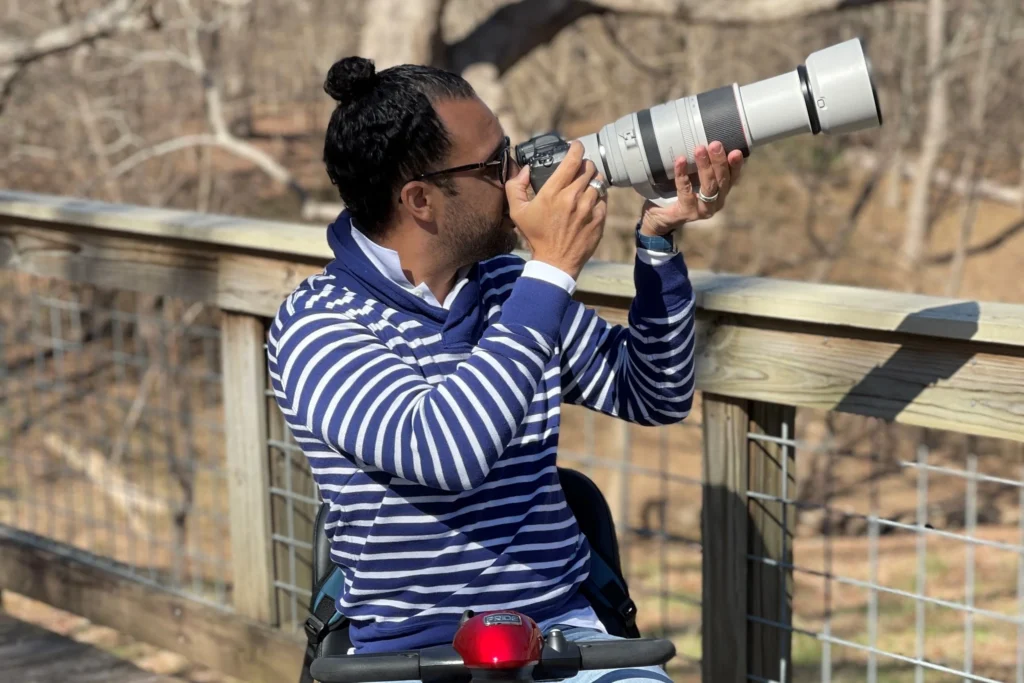
Last year, my husband Kyle suffered a massive stroke. In an instant, our lives changed. He became permanently disabled and would need rigorous speech, occupational, and physical therapy, which he continues to this day. One year later, his hard work at rehabilitation has allowed us to live independently and get back to our lives and marriage albeit things look a lot different than before. Kyle isn’t a birder – it is my sole endeavor – but one day he surprised me and said, “I’d like to go birding with you this weekend.” He must have known I was aching to get out!

How My Husband’s Disability Eased my Anxiety and Enhanced my Birding  Read More »
Accessible Christmas Bird Counts

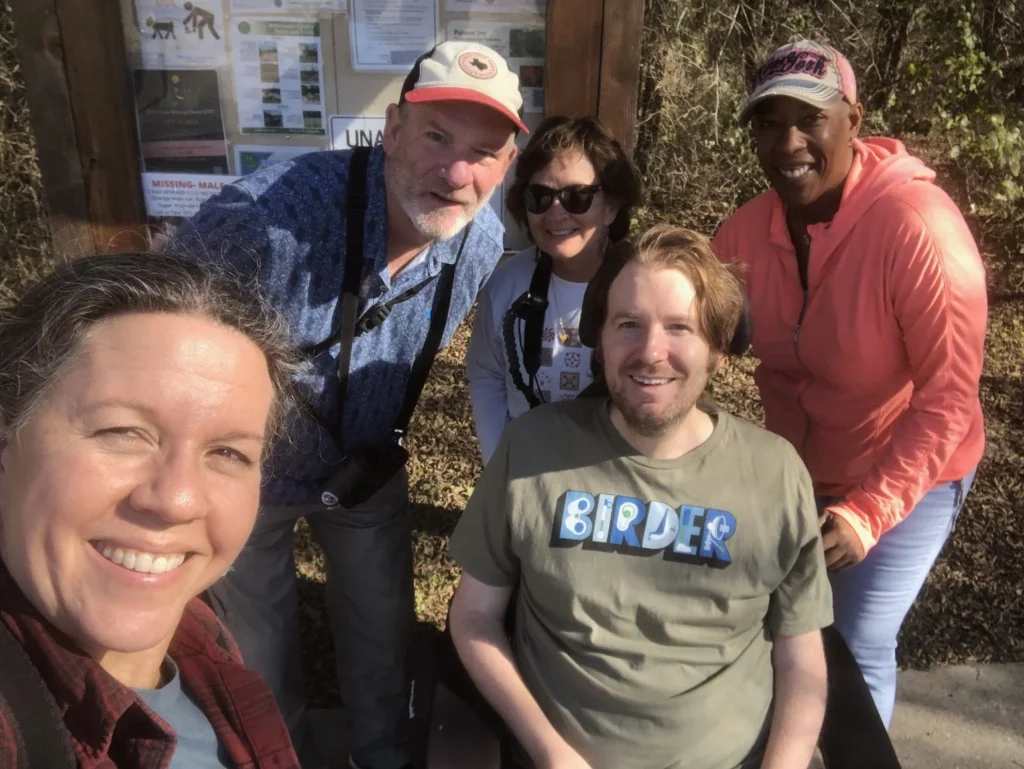
Christmas Bird Counts (CBCs) are an annual community science project, going on 123 years, in which teams of birders collect data on winter birds. The National Audubon Society organizes this event as an effort to track bird population trends and the data is valuable to biologists and conservation! Over the past few years, Birdability has encouraged birders to organize CBCs that are accessible to disabled birders. Historically, birders who experience access challenges were often unable to participate in the Christmas Bird Count, but we are working to create opportunities for these folks to be included in their local CBCs.

Accessible Christmas Bird Counts Read More »

Competing in the World Series of Birding with Autism and chronic illness

When I was invited to be a part of Birdability’s Team Nuthatch at the World Series of Birding, so much of this seemed impossible. How was I going to drive one of the most difficult routes in the country, from Connecticut, around the sprawl of New York City, to southern New Jersey? How could I spend a weekend with a team made up of five people I’d never met in person? How would I deal with the uncertainty of birding at a new place during a large event I was unfamiliar with? But I said yes, anyway.

Competing in the World Series of Birding with Autism and chronic illness Read More »

Trading in my wings for wings: Complex Regional Pain Syndrome and bird photography

At eight years old I took my first flight lesson. I knew flying was what I was going to do the rest of my life. I was mystified beyond belief. How was I just suspended in the air? My fascination with birds had begun, but I had not realized that. Looking down from the window of the plane, over Atlanta, I could see my whole life: where I lived, where I was born. Places that I had seen so many times, but never from this perspective.

Trading in my wings for wings: Complex Regional Pain Syndrome and bird photography Read More »

A success! Birdability and allyship in action at the San Diego Bird Festival

Last week, Birdability founder Virginia Rose and Birdability Coordinator Freya McGregor were birding in Southern California. Here’s a wrap up of why the San Diego Bird Festival, held by San Diego Audubon Society, was a success from Birdability’s perspective. It boils down to the fact that San Diego Audubon, and the festival coordinator Jen Hajj in particular, are wonderful allies.

A success! Birdability and allyship in action at the San Diego Bird Festival Read More »

Birds connect me to the world: Ways you can enable Autistic birders

Day-to-day life as an autistic person can be unpredictable.  I often feel unbalanced.  Birds connect me to the world.  Yet, when I’m birding, everything holding me down feels less weighty, like being buoyant in salt water.  The connection provides relief from isolation, and the weightlessness quiets anxiety and uncertainty. I’m both grounded and untethered in a fleeting moment of bird-human-nature encounter.

Birds connect me to the world: Ways you can enable Autistic birders Read More »

Quick facts about braille

Braille is super cool. A tactile code (not a language of it’s own), it is used to write languages from English to Arabic so people who are blind or have low vision can read. We love seeing braille used labelling diagrams on interpretive signs; labelling trail maps; an in booklets visitors to natures centers and parks can borrow, so braille readers can access the same information on interpretive signs that sighted visitors can.

Quick facts about braille Read More »